


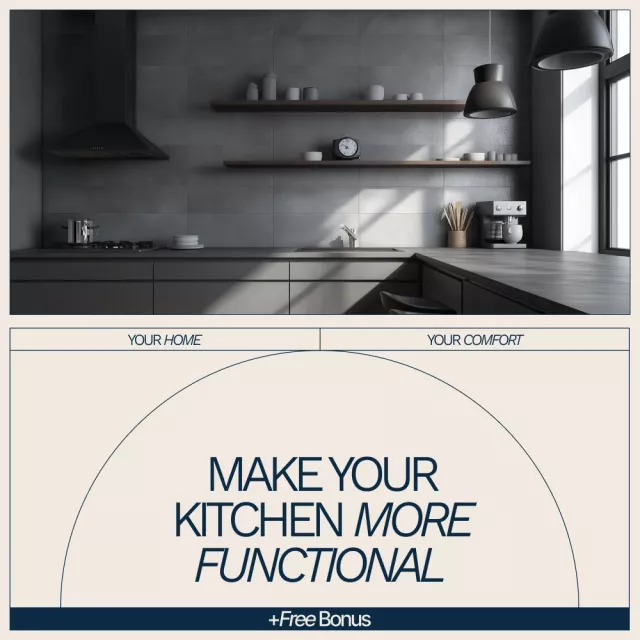
Transform Your Kitchen Into a Space That Truly Works for You
Your kitchen should make life easier, not more frustrating. This easy-to-follow digital guide shows you exactly how to turn an inefficient kitchen into a smooth, organized, and enjoyable space to cook, prep, and gather. How to Make Your Kitchen More Functional is a practical eBook designed to help you eliminate clutter, improve workflow, and make smarter layout and storage choices without needing a full renovation. Whether you cook daily or just want a better-organized home, this guide walks you step by step through how to make kitchen more functional using proven strategies and modern tools.
What’s Inside This eBook
- Why kitchen functionality matters and how it impacts daily life
- How to assess your current kitchen layout, storage, and workflow
- Clear explanations of kitchen work triangles and functional zones
- Smart layout and traffic flow optimization techniques
- Storage solutions for cabinets, pantries, and small kitchens
- Ideas for hidden, vertical, and pull-out storage
- Guidance on choosing space-saving tools and appliances
- An introduction to smart devices and AI-powered kitchen upgrades
- Common kitchen mistakes and how to avoid them
- Next steps for ongoing optimization using AI tools
Who This Guide Is For
This eBook is perfect for homeowners, renters, busy families, home organizers, and anyone feeling overwhelmed by an inefficient kitchen. If you’ve been searching for practical advice on how to make kitchen more functional without complicated design jargon, this guide was created for you.
Why This eBook Is Different
Unlike generic kitchen guides, this resource blends timeless organization principles with modern solutions, including AI tools and smart technology. It focuses on realistic changes you can actually implement, no matter the size or style of your kitchen.
What You’ll Gain
- Save time with smoother kitchen workflows
- Reduce stress by eliminating clutter and inefficiency
- Make better use of existing space without remodeling
- Feel confident making smart kitchen upgrades
Download and Get Started Today
Stop struggling with a kitchen that doesn’t support your lifestyle. Download How to Make Your Kitchen More Functional today and start creating a space that works smarter, feels better, and supports you every single day.
Order cancellation
All orders can be cancelled until they are shipped. If your order has been paid and you need to make a change or cancel an order, you must contact us within 12 hours. Once the packaging and shipping process has started, it can no longer be cancelled.
Refunds
Your satisfaction is our #1 priority. Therefore, you can request a refund or reshipment for ordered products if:
- If you did not receive the product within the guaranteed time( 45 days not including 2-5 day processing) you can request a refund or a reshipment.
- If you received the wrong item you can request a refund or a reshipment.
- If you do not want the product you’ve received you may request a refund but you must return the item at your expense and the item must be unused.
We do not issue the refund if:
- Your order did not arrive due to factors within your control (i.e. providing the wrong shipping address)
- Your order did not arrive due to exceptional circumstances outside the control of reliabledealplaza.shop (i.e. not cleared by customs, delayed by a natural disaster).
- Other exceptional circumstances outside the control of https://reliabledealplaza.shop
*You can submit refund requests within 15 days after the guaranteed period for delivery (45 days) has expired. You can do it by sending a message on Contact Us page
If you are approved for a refund, then your refund will be processed, and a credit will automatically be applied to your credit card or original method of payment, within 14 days.
Exchanges
If for any reason you would like to exchange your product, perhaps for a different size in clothing. You must contact us first and we will guide you through the steps.
Please do not send your purchase back to us unless we authorise you to do so.
Instant download
Your purchase will be available to download once payment is confirmed.
Instant download items don’t accept returns, exchanges or cancellations. Please contact us if you have any problems








Wow, this guide totally revamped my kitchen routine! The smart layouts and storage solutions are genius - I’ve got more counter space than ever. Plus the AI tips? 🚀👌
A lifesaver for my tiny kitchen - got it looking spacious and functional!
No more cluttered counters or overstuffed cabinets...this guide is the real deal.
my kitchen used to be a hot mess, but not anymore thanks to this ebook! who knew there's such thing as a 'kitchen work triangle'? now i'm cooking like a pro chef with everything in its right place. no more bumping into stuff or hunting for utensils 😎.
The AI-powered upgrades are next level - didn't know I needed them until now.
Went from kitchen chaos to culinary zen thanks to this gem.
This guide is a must-read! It's like having a personal kitchen designer.
I thought I was doomed with my small kitchen until I read this eBook. It gave me practical ideas on how to maximize every inch of my tiny space without breaking the bank. Now, it feels twice as large and ten times as functional!
Wow, smart devices in the kitchen? This eBook opened my eyes!
This guide is absolutely amazing!!! My pantry has never been so organized and efficient before. Those hidden storage ideas were top-notch 👍 Also loved that they included common mistakes we usually make - saved me from future blunders.
Who knew optimizing traffic flow could make such a difference? Brilliant!
I'm loving my new super-efficient pantry setup. Great tips inside!
Honestly, didn't think an eBook could help sort out my messy kitchen chaos...but boy was I wrong!! From assessing your current layout to choosing smart appliances (hello AI), it covers everything you need for a smooth-sailing culinary journey. Just follow their guidance step by step and voila – you have yourself an optimized dream kitchen.